Setting the Scene: The Feeling We Wanted
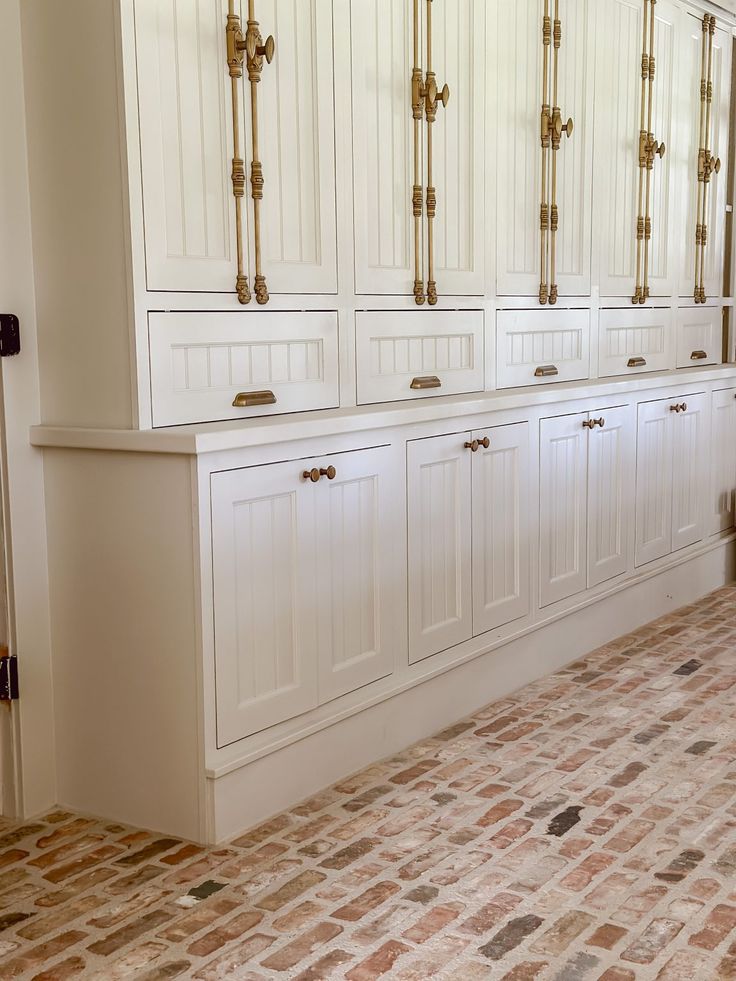
From the very beginning, we knew we didn’t want our kitchen to feel overly polished or precious. We wanted something warmer.
You don’t see brick flooring in kitchens all that often, and honestly, that was part of the appeal. We wanted a material that felt timeless and a little unexpected. Brick instantly brought in that old-world, European sensibility we were trying to achieve. I kept thinking about an old Southern charmer of a home, and this just felt right to me.
Yes, We Had Questions Too
Before committing, we had all the same questions everyone asks:
Is it cold? Is it hard to maintain? Will it hold up in a high-traffic space like a kitchen?
This post is meant to answer those exact questions—because while brick flooring isn’t the most common choice, it’s one that deserves far more attention than it gets.
The Materials We Chose
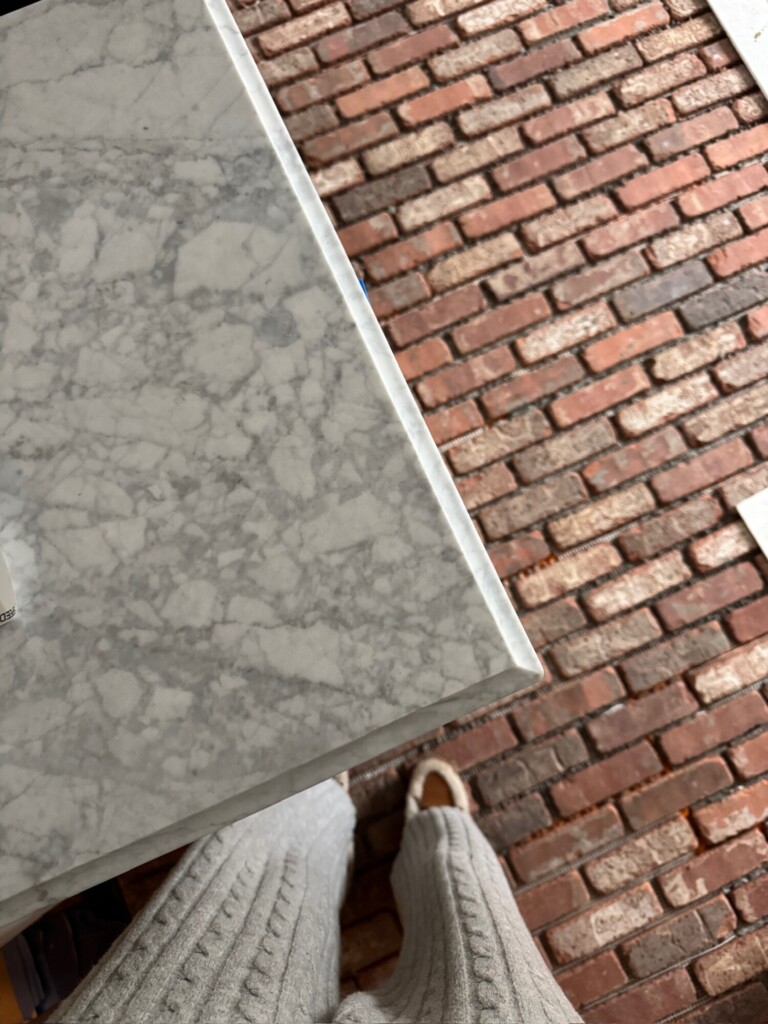
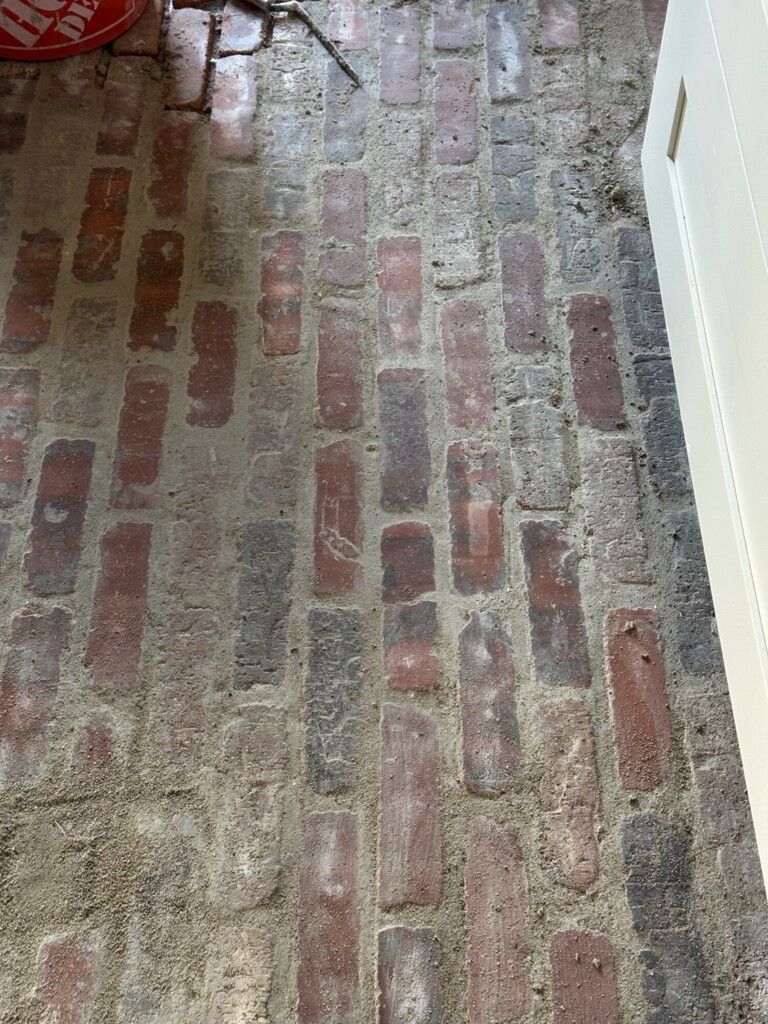
For our floors, we used Old Mill Brick in the color Castle Gate, sourced from Home Depot. We’ve only had the tile installed for about three weeks, so while we’re still early in the process, everything we’re sharing here is backed by extensive research, thoughtful planning, and lessons learned from past homes.
What Brick Veneer Actually Is
Brick veneer gives you the look and character of traditional brick, but in a much thinner, lighter format that works beautifully for interior floors. It delivers all the texture and variation we love about brick, without the bulk or complications of full brick installation (ie transition to other flooring).
The Old Mill bricks are kiln-fired, just like regular bricks, only thinner—so they’re still incredibly durable and well-suited for a high-traffic space like a kitchen.
Comfort Was Non-Negotiable: Heated Floors
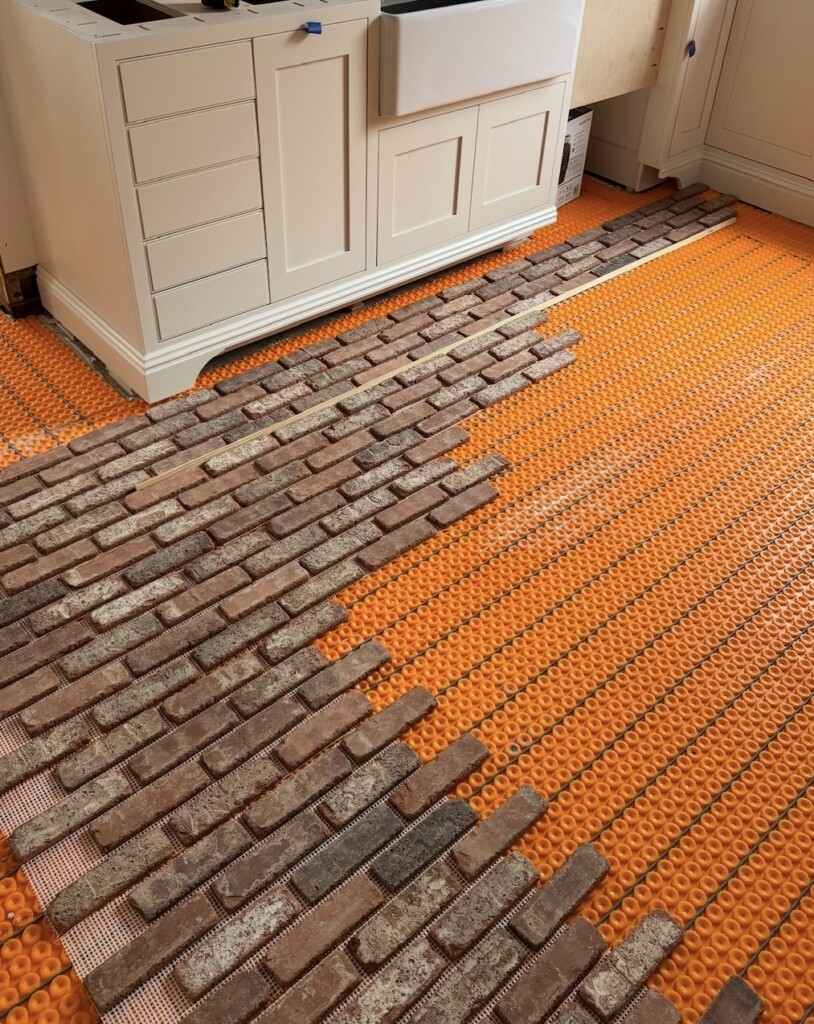
We’ve lived with stone floors before, and we know how cold natural materials can feel. So, by adding heated floors beneath the brick ensures that the space feels just as comfortable as it is beautiful, proving that brick doesn’t have to mean cold or uncomfortable underfoot.
Why We Over-Grouted
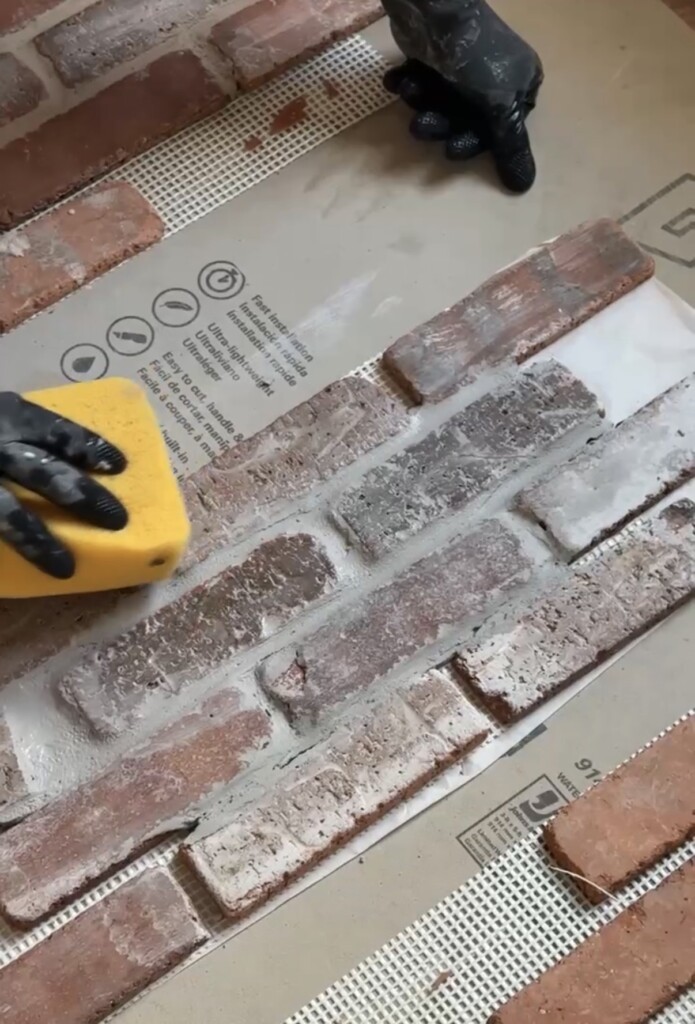
One of the biggest decisions we made during installation was to over-grout the brick—and this was very much on purpose. We were drawn to a softer, more washed, timeworn look rather than crisp, high-contrast grout lines. Over-grouting helped blur the edges and gave the floor that aged, lived-in feel we were after.
We did hire a mason for this project, and I truly can’t recommend that enough. This is a lot of work and very much an art form. I asked him to fill the grout lines as fully as possible—slightly over the edges—then smear and wipe it back by hand. The result feels organic and imperfect in the best way. If you’re considering brick floors, this is one area where I’d absolutely say it’s worth the investment to hire it out.
We chose a lime grout, the kind you’d find in centuries-old homes. I love its natural texture and softness—it’s not a stark white and not too gray, which helps keep the floor feeling warm and authentic.
Form and Function
From a practical standpoint, over-grouting just made sense. We didn’t want deep grout lines or uneven edges that could catch toes or feel uncomfortable underfoot. Smoothing everything out creates a more seamless surface, which is especially important in a kitchen where you’re constantly moving around—often barefoot or in socks.
Maintenance & Upkeep (The #1 Question)
Let’s address the biggest concern right away: maintenance. This is the question we get asked most, and it’s honestly far simpler than people expect.
Day to day, upkeep looks like vacuuming, sweeping with a good old-fashioned broom, and mopping as needed—nothing fancy. While we haven’t fully lived in the space yet with daily cooking and traffic, early maintenance has been very straightforward.
For spills or scuffs so far, spot cleaning with a damp rag and a little soapy water has been more than enough. We’ll continue to share updates as we live with the floors longer, but everything we researched pointed to brick being far more forgiving than people assume.
The biggest thing to know is that brick flooring isn’t precious. It’s meant to be lived on: walked over, cooked around, and enjoyed without constantly worrying about every little mark. If anything, a bit of wear only adds to the character over time.
So, if upkeep is what’s holding you back, don’t let it. Brick can absolutely hold its own in high-traffic spaces like kitchens while still feeling warm, timeless, and approachable.
Where Brick Flooring Actually Works (Yes, Even High-Traffic Areas)
Brick flooring isn’t something I’d reserve only for “pretty but impractical” spaces. We felt confident using it in our kitchen (obviously), but also carried it straight into our laundry room since the two spaces connect.
Beyond that, brick works beautifully in bathrooms (especially a powder bath), entryways, and mudrooms. Basically, anywhere you want something hardworking but full of character). These are high-traffic zones by nature, and brick holds up without feeling overly delicate, making it a great option for spaces that see a lot of real life.
Living With It (So Far) + Final Thoughts
At the time of writing this, the brick floors have only been installed for about a few weeks, so yes—we’re still very much in the honeymoon phase. As we continue living with them and putting them to the test, we’ll be sure to share updates along the way.
If there’s one takeaway from this project, it’s permission to choose something a little different. Not every decision needs to be the most common or the most “on trend.” What matters more is how a space feels day to day. These floors feel collected and intentional rather than cookie-cutter—and that makes a real difference in the spaces we live in every day.
At the end of the day, the best materials are the ones you’ll love living with, not just photographing. The ones that age well, tell a story, and make your home feel like yours.
Brick floors included.