There’s something so satisfying about well-styled shelves, isn’t there? This design essential can instantly make a room feel more thoughtful, personal, and complete. But, there’s a fine line between intentional styling and just … adding too much. I’ve been there—thinking that more layers, more objects, and more “stuff” would make it feel more styled. Spoiler alert: it didn’t. It just felt cluttered.
As we head into the warmer months, our homes naturally want to breathe a little more. We swap heavy blankets for lighter throws, open the windows, and crave a sense of airiness—and your shelves should follow suit. In this post, we’re breaking down why over-styling can work against you, how to avoid it, and simple ways to refresh your shelves for the season.
Let’s simplify, lighten up, and make your shelves feel effortless!
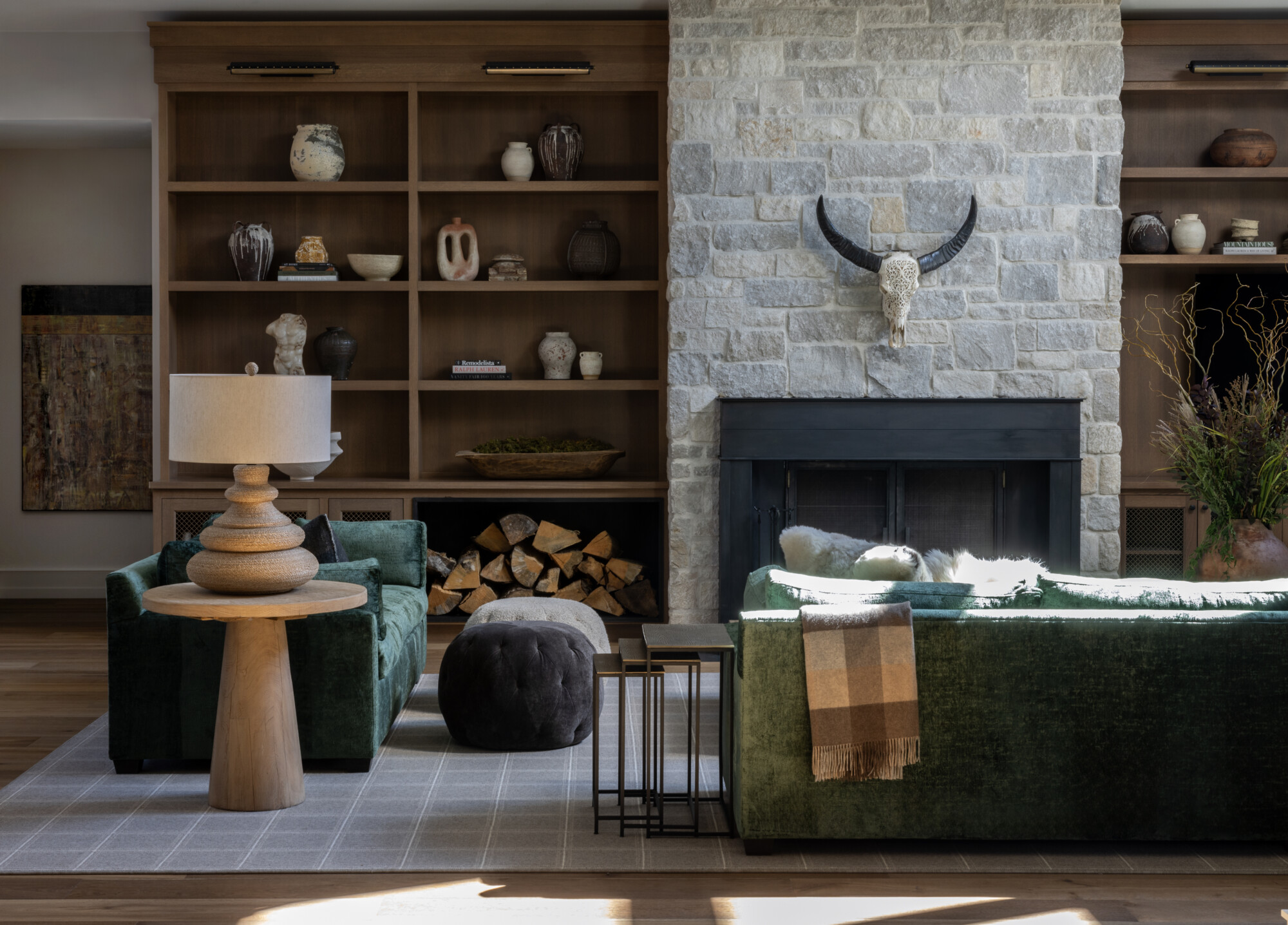
Why Over-Styling Happens
Let’s be honest—styling shelves can feel oddly intimidating. They’re one of those spots in the home that are always visible, and it’s tempting to treat them like a display case for everything you own. But, more often than not, over-styling happens because we’re trying a little too hard to make them “feel done.”
Here’s why that happens:
- We don’t want blank space. Empty spots can feel like something’s missing, so we fill them—fast. But shelves actually benefit from breathing room. Your eye needs somewhere to rest.
- We’re emotionally attached to everything. Books from college, family heirlooms, a candle you bought on a whim—somehow it all ends up on the same shelf. While there’s a time and place for sentimental pieces, trying to style them all at once leads to visual clutter and confusion.
- We love a lot of styles. One day you’re into minimalism, the next it’s European farmhouse, and suddenly your shelves are trying to do both. Without a clear direction, shelf styling becomes a mix of beautiful pieces that just don’t speak the same language.
- We don’t know when to stop. And that’s totally normal. Styling is a process—it’s trial and error. But, over-styling often comes from a lack of editing. The truth is, the most beautifully styled shelves are just as much about what you don’t see as what you do.
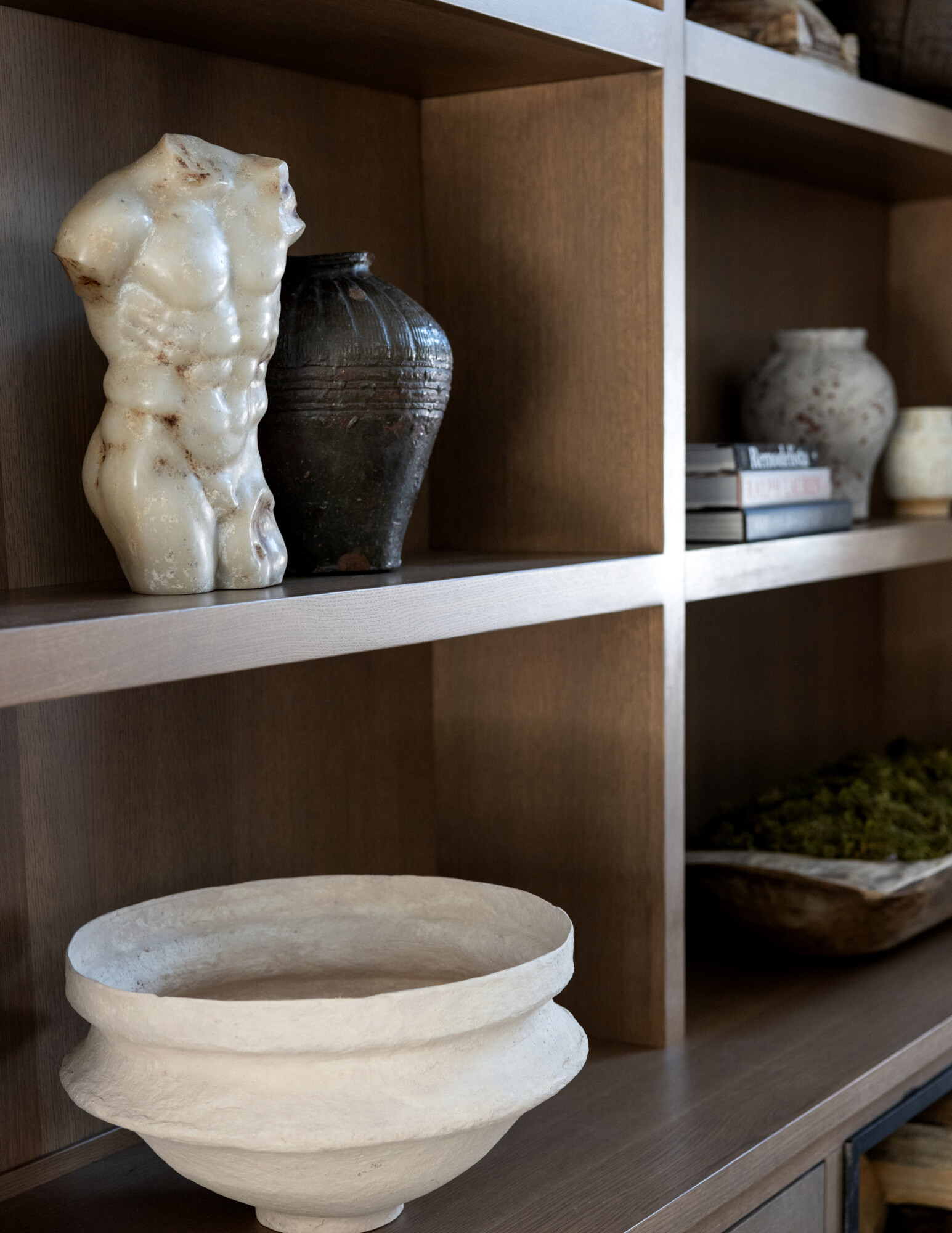
Shelf Styling: Basics That Always Work
Once you’ve edited things down, it’s time to start fresh—with intention. Whether you’re styling open kitchen shelves, a built-in bookcase, or a living room moment, these basics always help bring balance and beauty.
- Vary Height and Scale
Mix tall and short objects to create visual movement. Stack books to elevate smaller pieces or lean artwork to break up the horizontal lines. - Use the Rule of Odds
Groups of 3 or 5 tend to feel more natural to the eye. Don’t overthink it—just play with what feels balanced and interesting. - Leave Breathing Room
Every shelf doesn’t need to be full. Negative space is your friend—it gives the eye a place to rest and allows your favorite objects to shine. - Mix Materials
Combine ceramics with wood, glass, or stone to add contrast and texture. This helps your shelves feel layered, not flat. - Balance Visual Weight
Anchor one side of the shelf with something slightly heavier, like a bowl or stack of books, and balance it out with lighter elements on the other end.
Styling shelves is truly an exercise in editing and layering. Think less about filling the space, and more about creating a thoughtful rhythm. Up next: we’ll show you how to transition your shelves for spring and summer to keep things feeling fresh and seasonal.
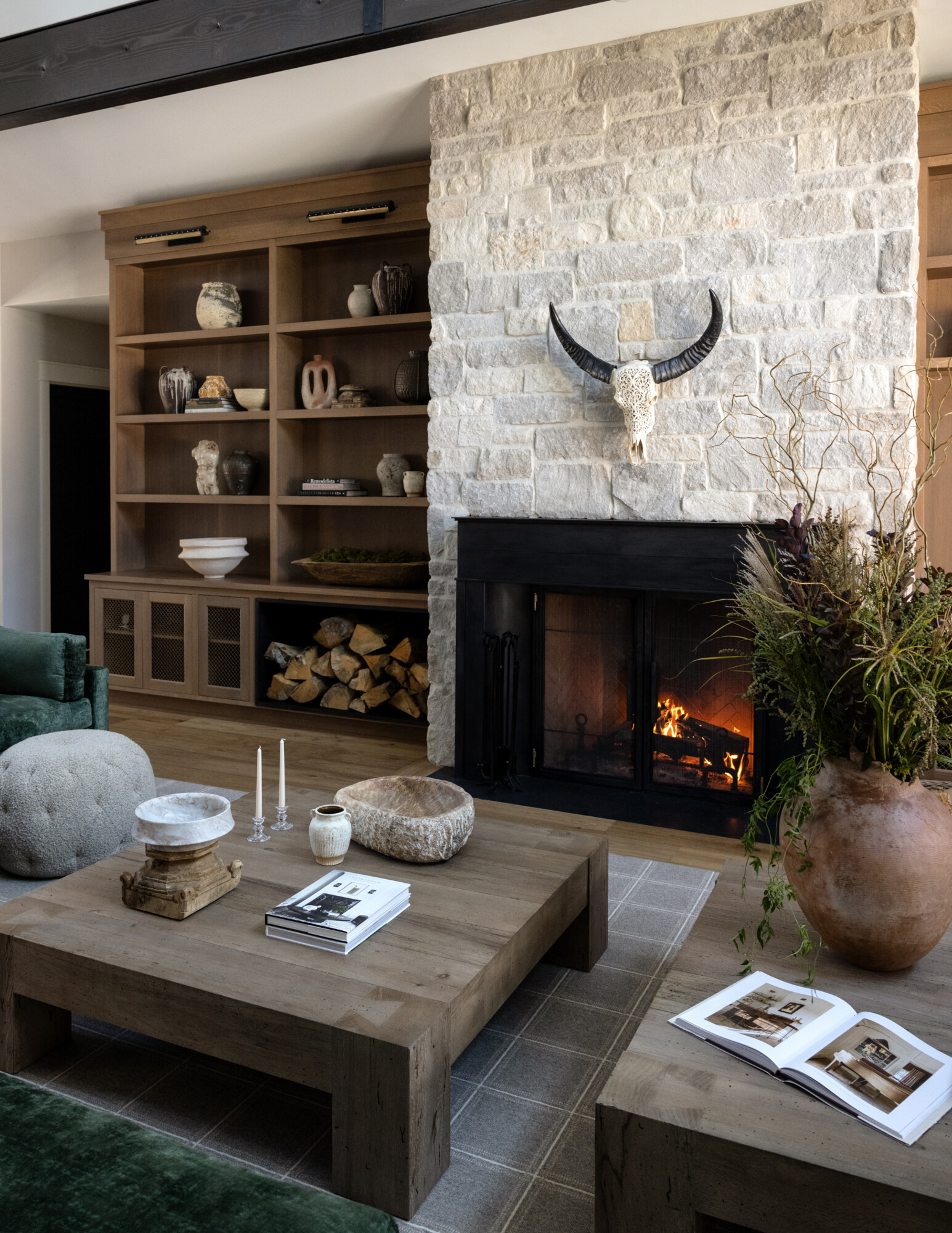
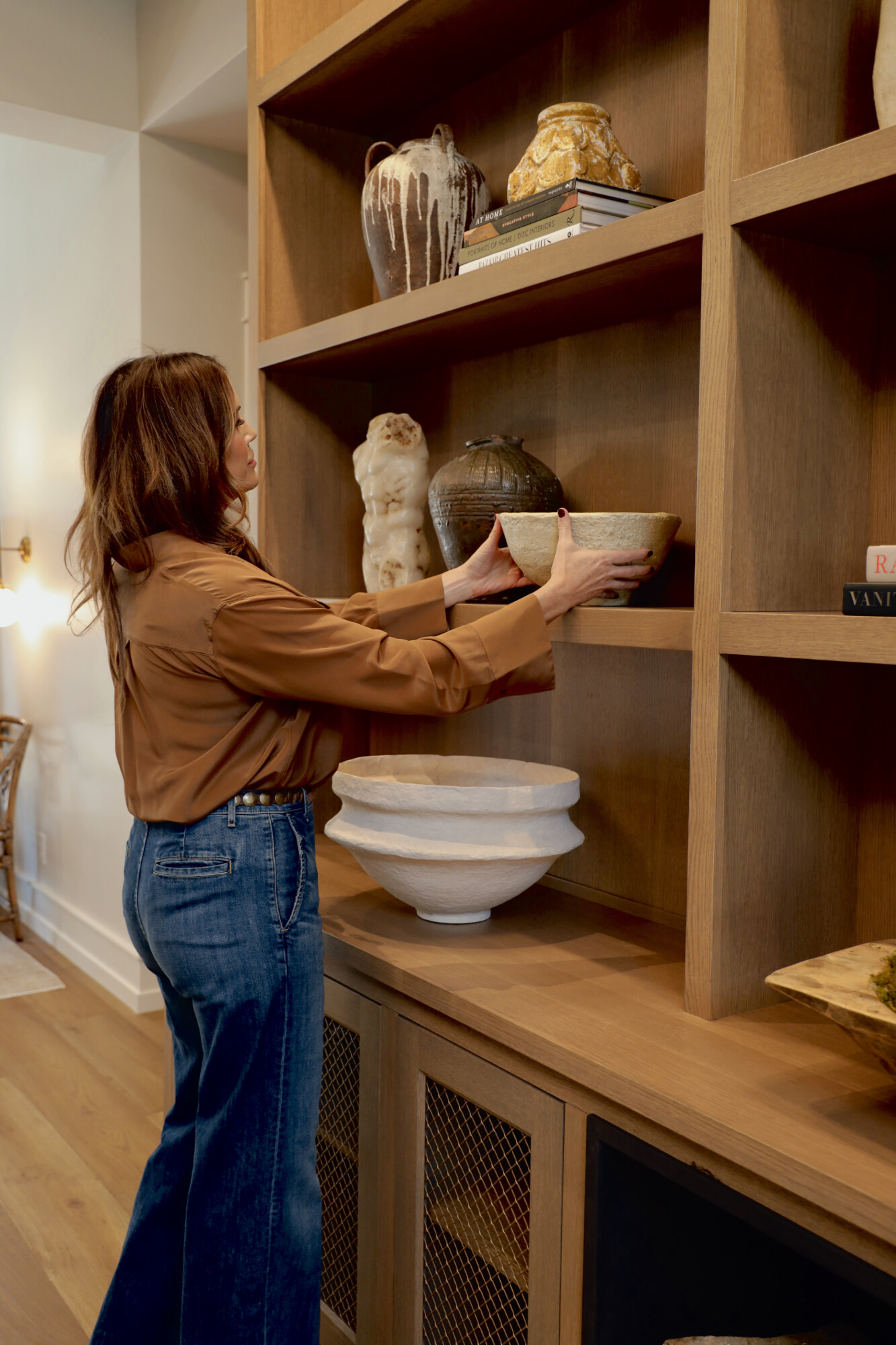
How to Edit What You Already Have
Before you buy anything new, try this: pull everything off your shelves and start with a blank slate.
Yes, everything.
It’s the easiest way to see your space with fresh eyes—and often, the moment you do, you’ll notice what felt cluttered, dated, or out of place.
Clouz Houz tip: Take a photo! Once you start placing things back, take a quick photo. It’s wild how much easier it is to spot what’s off when you’re looking at it on your phone. You’ll see if something feels too crowded, if the balance is off, or if one item is throwing everything out of rhythm.
Edit with Intention
Ask yourself:
- Does this piece add something meaningful or beautiful?
- Does it fit the vibe I’m trying to create?
- Can something else tell this story better?
If the answer is no, set it aside. Sometimes it’s not about getting rid of things—just putting them away for now. Rotate items seasonally, store pieces you still love, and make room for fresh energy.
Let Your Shelves Breathe
Shelf styling shouldn’t feel like a puzzle you can’t solve. As you head into the lighter, brighter months, give yourself permission to pare things back, refresh what you already own, and make room for the pieces that really speak to you. A few thoughtful changes can completely shift the energy of a space—and often, less really does feel like more.
Need a little more direction?
Are you struggling to define your style or figure out how to pull your space together? That’s exactly why we created our Clouz Houz Design Guides—to help you design a space that feels cohesive, elevated, and personal … without hiring a designer.
Click here to explore the five curated styles, complete with inspiration boards, designer tips, and product links that make sourcing simple.
Not sure which one’s for you? Take our free quiz to discover which aesthetic best suits your space.
We’re here to help you move forward with confidence—and create a home that truly feels like yours.
Life is short. Make it beautiful!