When it comes to designing your room layout and deciding on which furniture to purchase, it can feel overwhelming when you don’t know where to start. My best advice is to find one item or style that you love, then design around that. Personally, I usually like to start with my sofa, and then find other pieces like coffee tables, accent chairs, side tables, and lamps that compliment it. Finding the right pairing is very rewarding, but it takes some work!
To help give you some inspiration, we put together three different sofa and coffee table combos. It all comes down to personal preference and style, but I definitely wanted to share some insider tips that I, as a designer, follow when going through this furnishings process.
When choosing a combination for your sofa and coffee table pairing, here are the top five things to keep in mind:
- Material Contrast: Try to choose a table material that contrasts slightly with the tone of the sofa fabric. This provides a nice look and grounds the space with contrast. Other pieces in the space can then compliment the tones in either the table or the sofa fabric.
- Silhouette Coordination: Think about the shapes of the table and how they pair with the profile of the sofa. For instance, if the sofa has a curved back, compliment it with a round or organic-shaped table. Bring in 90-degree corners with other accents such as lounge chairs or your area rug.
- Balance: If the sectional has a heftier feel, like wide arms and a solid base (hidden feet, etc.), pair your sofa with a heftier base on the coffee table as well. Conversely, some might prefer to go the polar opposite and keep the table light and airy with a larger sofa. Either way can work—remember, there are no rules. Do what feels right for the space.
- Tight Spaces: Tight spaces do best with round coffee tables, especially sofas with a chaise or return like a sectional. This helps maintain flow and avoids harsh corners.
- Scale Considerations: Consider the scale of the sofa in comparison to the table size. In general, you want the width of the coffee table to cover at least two-thirds of the sofa’s face so it’s practical for setting drinks, kicking up feet (if you allow that in your home 😉), and more.
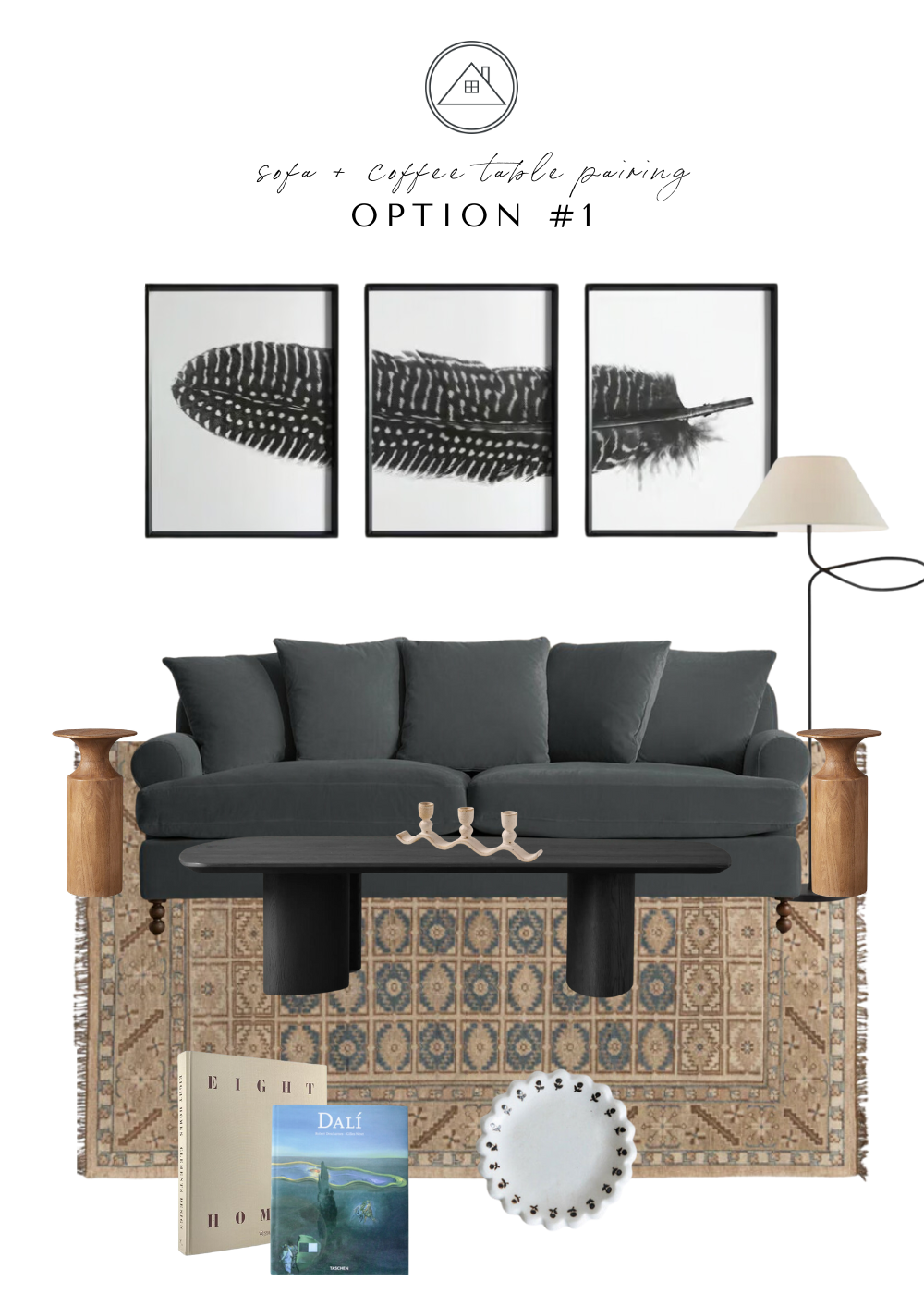
Option #1: Modern Rustic Charm or Feathered Elegance??
For this look, we combined a plush, dark gray sofa with a sleek black coffee table, creating a bold and modern foundation. The geometric patterned rug adds texture and a touch of rustic charm, while the large feather art pieces bring an organic feel to the space.
Why It Works: The dark sofa and coffee table create a striking contrast that anchors the room. The sofa’s rich color grounds the space and provides a sophisticated backdrop for the other elements. The black coffee table adds a modern edge and compliments the sofa perfectly. The balance between the heavy, dark pieces and the lighter, natural textures like the wooden side table and patterned rug makes the room feel inviting yet polished.
 Clouz Houz Tip: When pairing a dark sofa and coffee table, ensure the room has plenty of natural light or lighter elements to prevent it from feeling too heavy. Adding light accessories, like the wooden side table and feather art, can create a more balanced look.
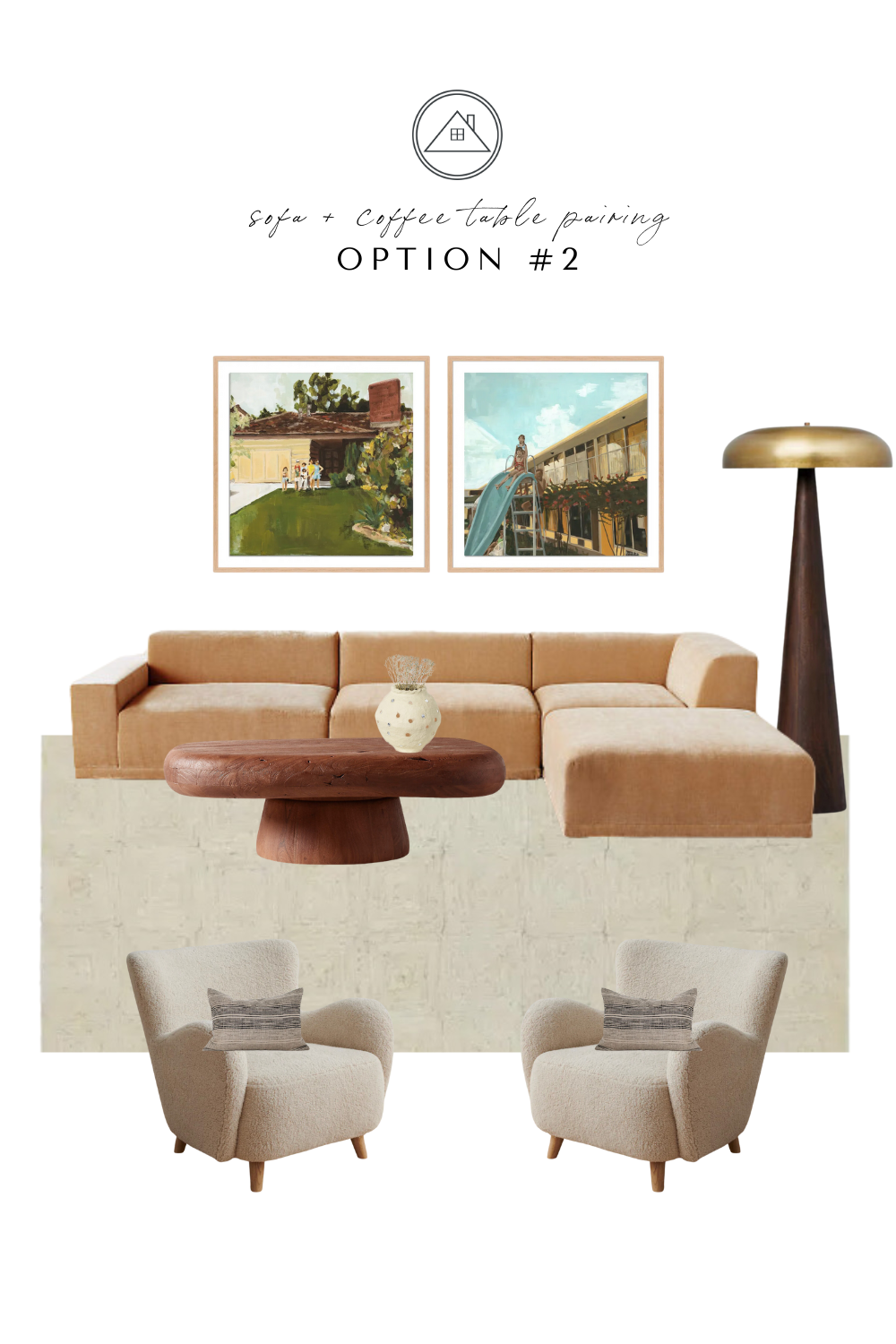
Option #2: Warm and Inviting Retro or Golden Daydream??
This pairing features a cozy, camel-colored sectional with a mid-century modern coffee table. The soft, neutral rug grounds the space, while the vintage-inspired artwork above the sofa adds character and nostalgia.
Why It Works: The warm tones of the camel sectional immediately make the space feel inviting and comfortable. The mid-century modern coffee table, with its clean lines and wooden texture, compliments the sectional by adding a touch of retro charm. This combination works well because the coffee table’s simplicity allows the sectional to be the focal point, while the coffee table’s unique design adds visual interest without overwhelming the space.
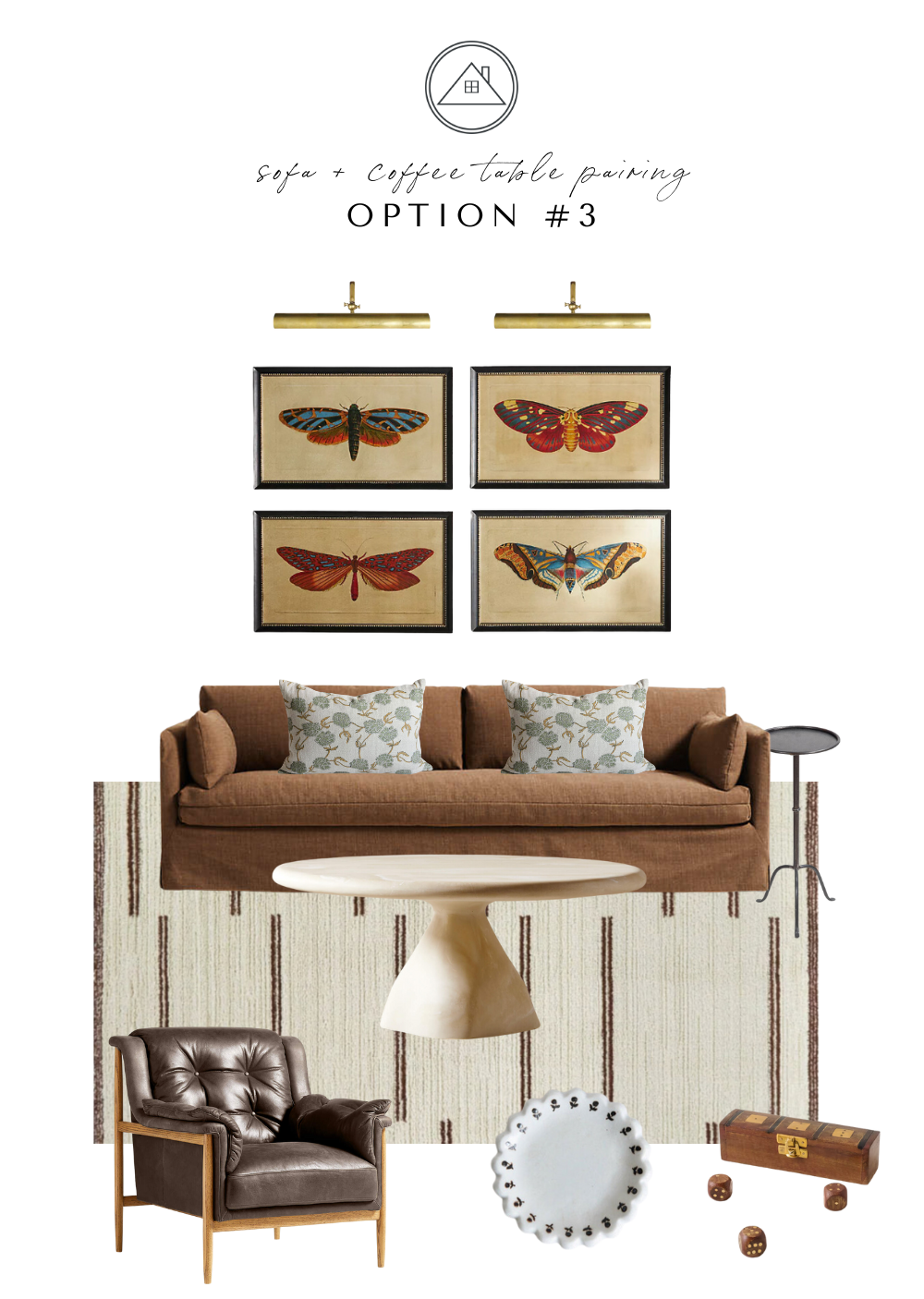
Option #3: Eclectic Boho Chic or Vintage Whimsy??
For a more eclectic and bohemian feel, we paired a rich brown sofa with a sculptural white coffee table. The colorful butterfly prints and patterned pillows add a playful touch, while mixed materials (leather chair, marble table) add depth.
Why It Works: The rich brown sofa provides a warm, earthy base that grounds the eclectic mix of elements in this setup. The sculptural white coffee table stands out as a statement piece, adding a modern twist to the boho look. This pairing is successful because the contrasting colors and styles between the sofa and coffee table create a dynamic, eye-catching focal point. The coffee table’s light color and unique shape draw attention without competing with the sofa’s warmth.
***
Hope these “guidelines” are helpful. Remember there are no rules — just suggestions and tips we have found to be helpful when we design our client’s spaces … or our own! Don’t be afraid to mix and match different styles and materials. Make sure to tie the room together with a cohesive color palette and a few repeating patterns or textures.
We hope these pairings light the fire of creativity for your own living or family room. Have fun with it, and if you’re still unsure, you know where to find us!