CLOUZ HOUZ DESIGN GUIDES - What’s your style?
TAKE THE QUIZ
Projects

Our Garage + New Workout Room

Our garage + new workout room


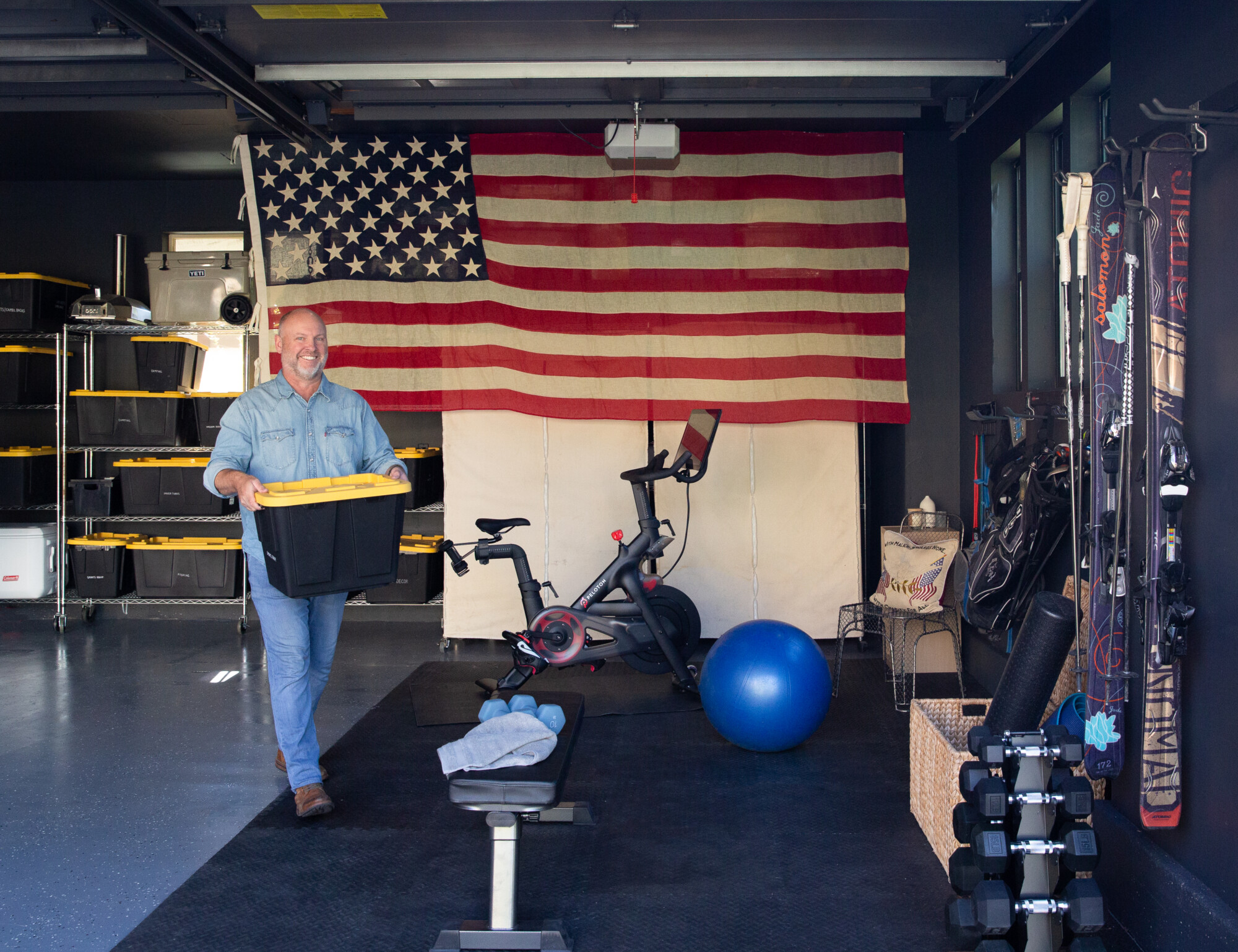
When we set out to organize our garage this past summer, we knew we were in for a big project! It had become a dumping zone for everything from old furniture, staging and styling supplies and retired ski clothes to tools, sporting equipment, paint … you get the picture. We have a three car garage that had no room for cars (!) and the things that were in there were really really hard to find. So, we decided it was time to make the space more functional and organized.

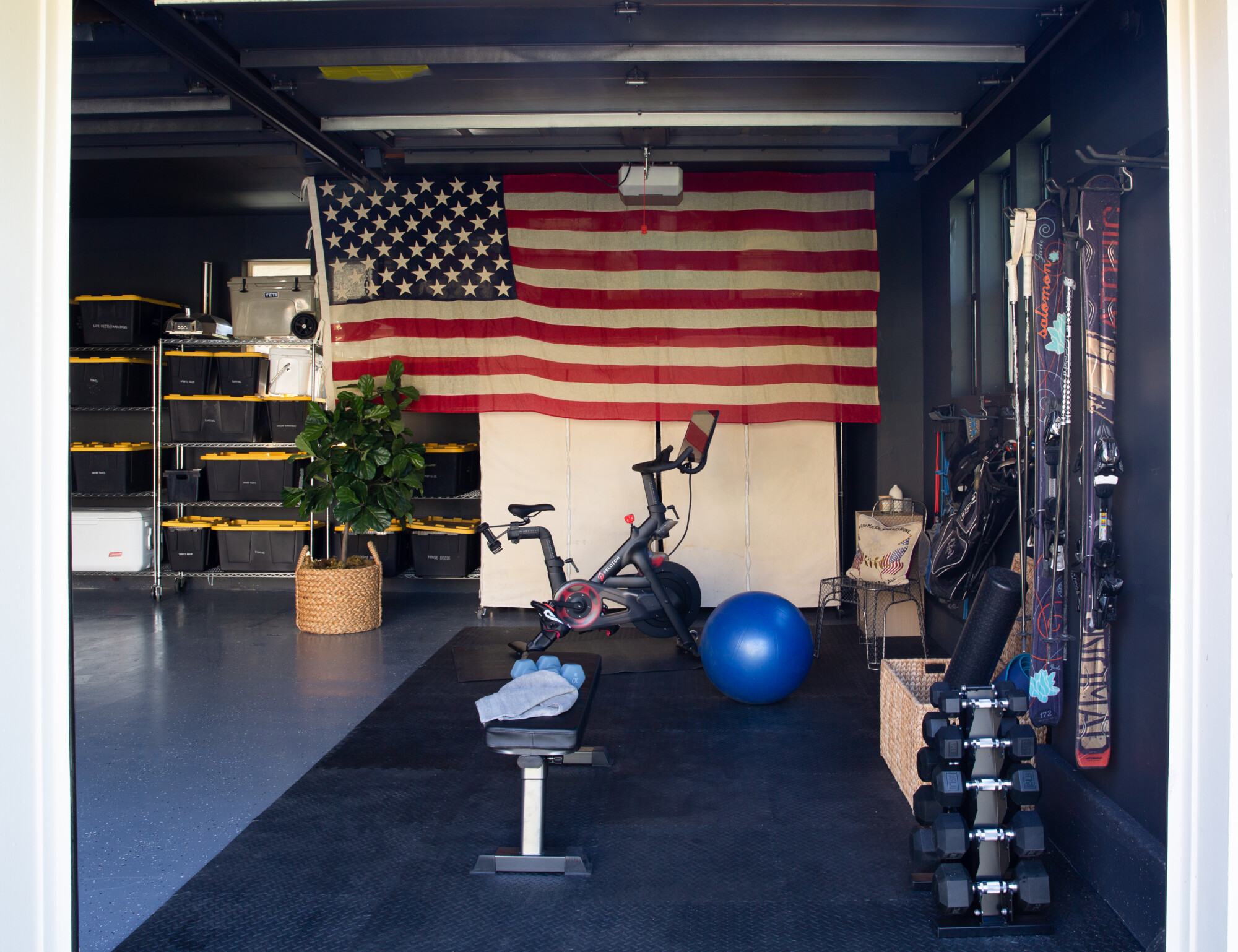
Since we needed a dedicated area for working out, we chose to convert the third bay to a place for our Peloton and weights. And, if we organized the other two bays, we could finally park out cars INSIDE the garage 😂 Wouldn’t that be nice?? Especially during the winter months, when getting into a freezing cold car covered in snow is really not fun!

Here are a few things we learned in the process …


1. Sort 2. Purge 3. Organize! First, we literally sorted EVERYTHING in our garage. We laid everything out in groupings on the floor so we could assess what we had. Then, we were able to decide what we wanted to keep, and what was no longer needed. We created a donate pile, and Derrick loaded everything into bins to take to Goodwill. I can’t tell you how freeing this process was! Once we were left with the things we knew we needed and would actually use, it was time to organize. Finally, we placed the items that remained into bins, and labelled each bin for easy access. We wanted to be sure things got put away where they belonged.

Once the garage was cleared out, it was definitely easier to paint all the walls. What a difference this made! We decided that painting the garage a dark color would give it an industrial yet cool vibe, like in the photo below. We painted the walls, ceiling and backside of garage doors in Benjamin Moore’s “Wrought Iron” in a matte finish (which hides all the cracks and dings). Everyone absolutely loves it! Derrick sprayed it on everywhere, including all the pipes and conduits, so they now just kind of recede into the space.

CLOUZ HOUZ TIP: If you haven’t used something in 6 months or more, you most likely won’t use again. Our advice: cut ties now from all the clutter and free yourself of all these extra things you don’t need!
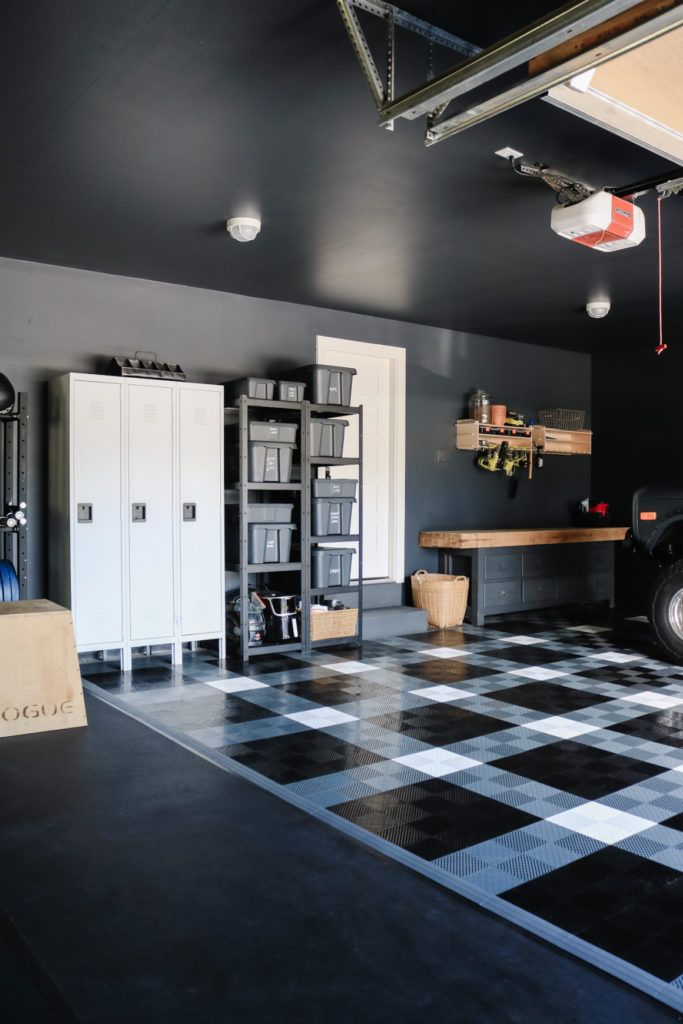
Source: Nesting with Grace

One of the biggest game changers for the garage was refinishing the floor. We looked into so many options for what to do with it! We considered everything from Swisstrax (which we had in a previous home), to paint, to epoxy. Derrick and I chose an epoxy floor that he was able to paint himself. I’d suggest you give yourself at least 4 days to go this route, including drying and curing time between each step.

Check out our “Garage Makeover” highlight on Instagram @clouz_houz where we show the step-by-step process in detail!


A comprehensive list of the items we found to be useful for this project is below. This includes shelving, bins, flooring and more. We hope you find some inspiration as you put your home back together after the holidays and find yourself in the organizing and cleaning mood! We love our new and improved garage space! It’s tidy, organized AND we have a place we can retreat to for a good sweat. Bring on 2023 resolutions for more self care 🌟

1

Rubber Gym Flooring

We found this flooring to be a breeze to install. You can just snap the pieces together! It literally took us an hour to lay out our floor. They have a texture to them (almost like a tire imprint), so they aren't slick when they get wet. This is helpful after a tough workout! They are super easy to clean too. Just wipe down with water and a little dish soap.
Gym Floor
2

Metal Shelving on Wheels

We've owned these metal shelves over the years and used them in basements, craft rooms, etc. They are so versatile! You can opt to put them on wheels (sold separately) which makes them a dream for moving around. Then you can line them up in front of one another for more storage, and easily move the front one out of your way to get to the one behind. The shelves are adjustable, allowing big and small items to be stored on them. We lined them up along the back wall of the garage to arrange all the bins containing our stuff.
Industrial Metal Shelves
3

Clothing Rack with Cover

These canvas covers with zippers make the above shelves perfect for storing extra coats and gear. We have a couple where we store extra ski gear and clothing. The shelves can be converted to a wardrobe with hanging rods, and by adding the canvas covers everything is protected and free of dust.
Clothes Rack with Cover
4

Dumbbells Set

This set is a great value for how many weights you get! I love that they stack neatly and don't take up a lot of room. The all-black color works with our vibe too. They have to have function and form -- right?! Ha!
Dumbbells Set
5

Storage Bins

These aren't the exact storage bins we used, but very similar. They come in various sizes. The lids snap on and off easily. We used a chalk bin to write on each one the items that are stored inside. I love how organized the back wall looks now with all the same color bins neatly stacked on the metal shelves!
Storage Bins
6

Put In the Hours Flag

I first saw this cute retro-inspired camp banner when I read the post on Nesting with Grace about how they revamped their garage. I love the little extra something it gives to the gym space, and it's a gentle reminder that staying fit takes dedication.
Put In The Hours Flag
Join the Conversation

get inspired
#clouzhouz
follow along
@clouz_houz
Before we sketch a floor plan or source furniture, we sit with the house and let it speak a little.
For the 6th Street Bungalow, this step was especially important. The house has its own personality, and the flatlay helps us study it from every angle.
It lets us play, make changes early, test combinations, and make sure each material has a reason for being there. Nothing is theoretical at this stage.
We want to feel the stone, the fabrics, the wood tones, the finishes, and see how they interact from room to room.
The flatlay becomes our anchor — a visual blueprint that keeps the design cohesive while giving us room to refine as we go. It’s a crucial part of our process and one of the most valuable tools for creating a home that feels intentional, personal, and true to the architecture.
If you want to get started on your home, our spots for Q1 of the new year are filling up. Visit our website (link in bio) to inquire.
My ins and outs this year!
Do you agree? Let me know if I missed any in the comments!
Hang in there for me on this one (I feel very passionately about this topic 😂). One of the things we care most about when designing homes is where the pieces come from. Vintage and antique sourcing isn’t just about finding something “different”... It’s about choosing pieces that already carry a story.
The truth is, the most memorable rooms aren’t built all at once or off a single shopping list. They’re layered over time. A chair with worn arms. A table that’s been repaired more than once. A piece you weren’t looking for, but couldn’t leave behind. Those are the things that give a home its soul.
When you bring vintage into a space, you’re investing in more than furniture. You’re investing in craftsmanship that’s hard to replicate today, materials that have already stood the test of time, and details modern manufacturing simply doesn’t prioritize anymore. And there’s something deeply satisfying about living with pieces that feel personal.
This is why we source the way we do. Not to fill a room, but to give it meaning. Collected doesn’t mean cluttered. It means intentional, patient, and a little emotional (in the best way).
A home should feel lived in, loved, and uniquely yours.
Ok here’s the truth- I have a lot of favorite whites- but this may be my new fave for cabinetry! 
Here’s the part no one tells you:
Most “bad” white cabinets aren’t bad colors… they’re bad context. White fails when it’s chosen in isolation. Paint chips are judged under fluorescent store lighting, held next to nothing, and decided before cabinets, counters, floors, or hardware are even finalized. Then that same white gets wrapped around an entire kitchen and suddenly feels gray at noon, yellow at night, or weirdly dull no matter how much light you have.
That’s why we chose Shoji White by Sherwin-Williams for our kitchen cabinets this time around.
Not because it’s trendy.
Not because it photographs well.
But because it behaves.
Shoji White has a soft warmth that doesn’t show up on a chip, but does show up when it’s next to real materials. It stays steady throughout the day, doesn’t compete with natural wood or stone, and doesn’t turn chalky once it’s covering full-height cabinetry. That consistency is what actually makes a white “safe” — not how popular it is.
Designer truth:
If a white only looks good at one time of day, it’s not a good cabinet white.
If it needs perfect lighting to work, it’s not a good cabinet white.
If paint decisions make you spiral, it’s not because you’re bad at this (it’s because white is reactive, and no one teaches you how to test it properly).
Our blog goes live today at 3:00pm PST, where I break down how to evaluate whites in your actual space and share a few other cabinet whites we consider truly “safe” — the ones we use repeatedly for clients because they hold up in real life, not just in photos.
Save this if you’re choosing cabinets soon.