
CLOUZ HOUZ DESIGN GUIDES - What’s your style?
TAKE THE QUIZ
Design

Brass Rails At The Bar!

The Brass Rail Detail That Took Our Bar to the Next Level

When we started designing our wet bar, I knew from the very beginning that I wanted a space that felt intentional and complete. Not just a functional corner, but something that looked and felt polished. Enter: brass shelf rails.
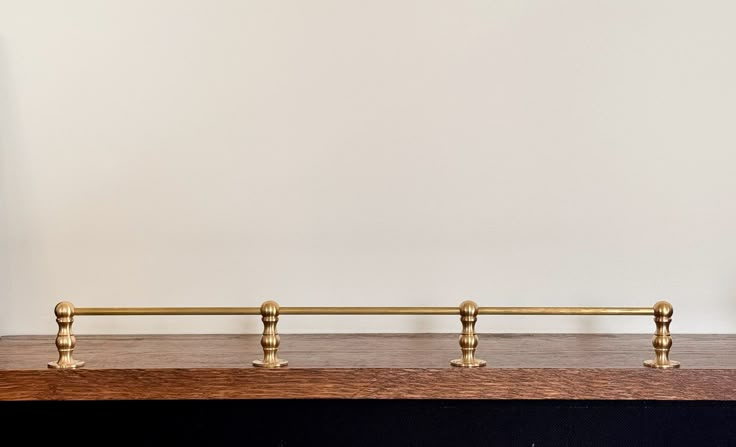
 

A classic brass gallery rail mounted on a wooden shelf, perfect for adding a refined and structured look to bar shelving, kitchen open shelves, or built-in cabinetry.


I’ve had my eye on these for years, obsessing over how they make even the simplest shelves look built-in and custom. They add that extra layer of detail that makes a space feel considered and high-end. And, now that they’re in? I can confidently say they were worth every bit of effort.

We get questions all the time about these rails—what they’re for, where we got them, how they’re installed, and if they’re purely decorative or actually functional. So, I thought it deserved a spot on the blog and I’m here to share all the deets so you can achieve this look!
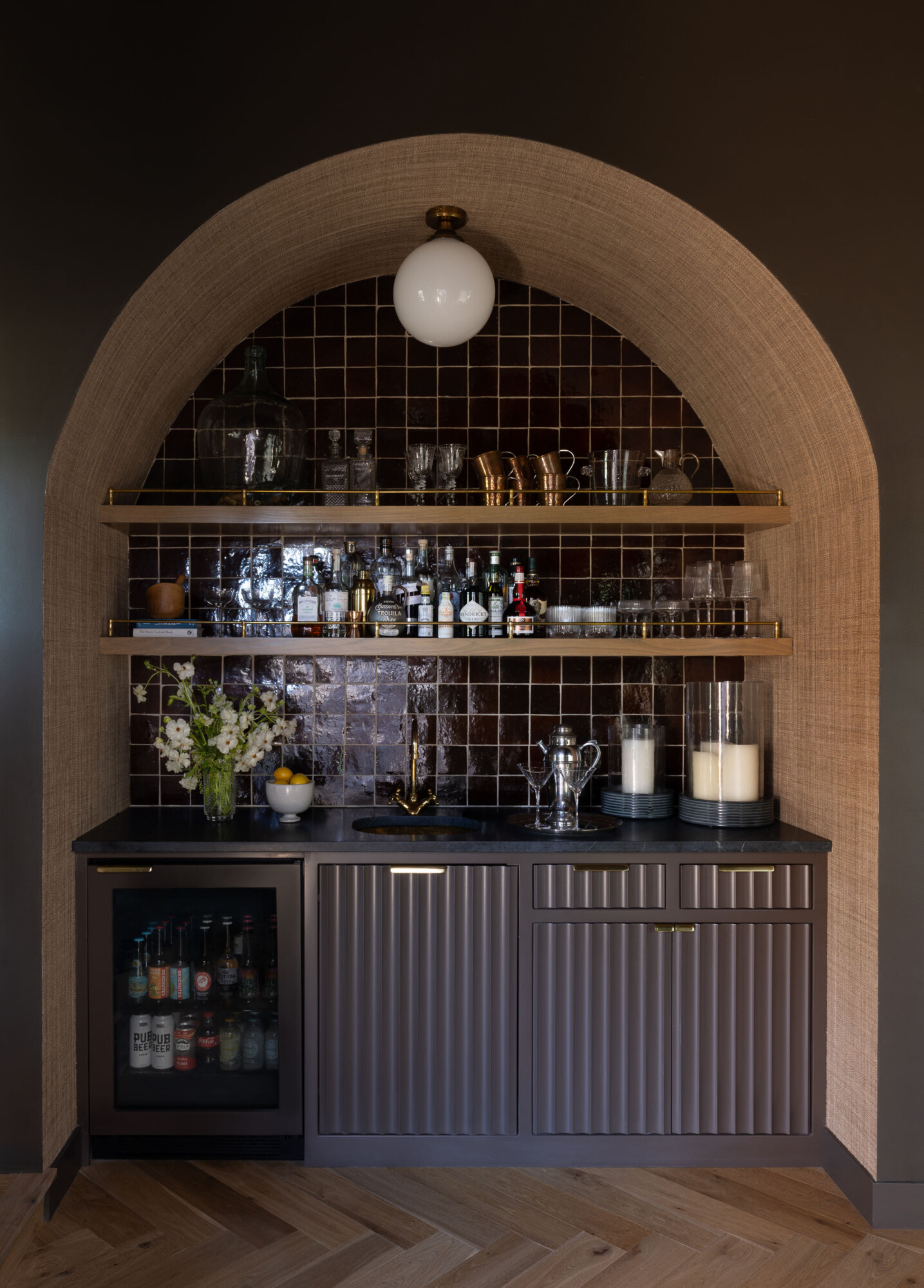
 

High Desert Tumalo Ranch | Bend, Oregon | Wet Bar | Home Bar Design | Archway | Wallpaper | Zellige Tile
Photo: Zee Wendell

Brass Gallery Rails | Brass Cabinet Hardware | Brass Faucet | Zellige Tile | Globe Flush Mount | Crystal Decanter | Copper Mule Mugs | Ribbed Coupes |

Cocktail Shaker | Tall Hurricanes | Ceramic Footed Bowl | Vintage Silver Tray | Brass Hammered Sink


If you want to shop our wet bar, as always, you can find everything—and more—over on our LTK. We’ve linked the exact products, along with some similar finds, to give you a couple of different options. And, if you love to shop our finds and obsessions, make sure to subscribe to our weekly newsletter. We share our top five products of the week, plus plenty of other good things—design tips, recipes, inspiration for refreshing your space, and more.


Why We Chose Brass Rails for Our Bar

For our wet bar, these rails made perfect sense. We wanted open shelves to display liquor bottles, glassware, and bar accessories—but without something to define the space, they felt like they were missing a final touch.

Here’s why brass shelf rails specifically worked so well for this setup.

They add structure. Liquor bottles, glassware, and decor are all contained neatly within the rail, instead of looking like they’re floating in an empty space.

They create a “built-in” look. These shelves are just standard floating wood shelves, but adding the rail makes them feel custom—like they were designed specifically for this bar.

They’re both practical and decorative. While we mainly added them for looks, they do help keep bottles and décor from shifting around too much.

Unlacquered brass = the perfect warm patina. We went with unfinished brass, which means it started off bright and shiny but will darken and develop a lived-in patina over time.
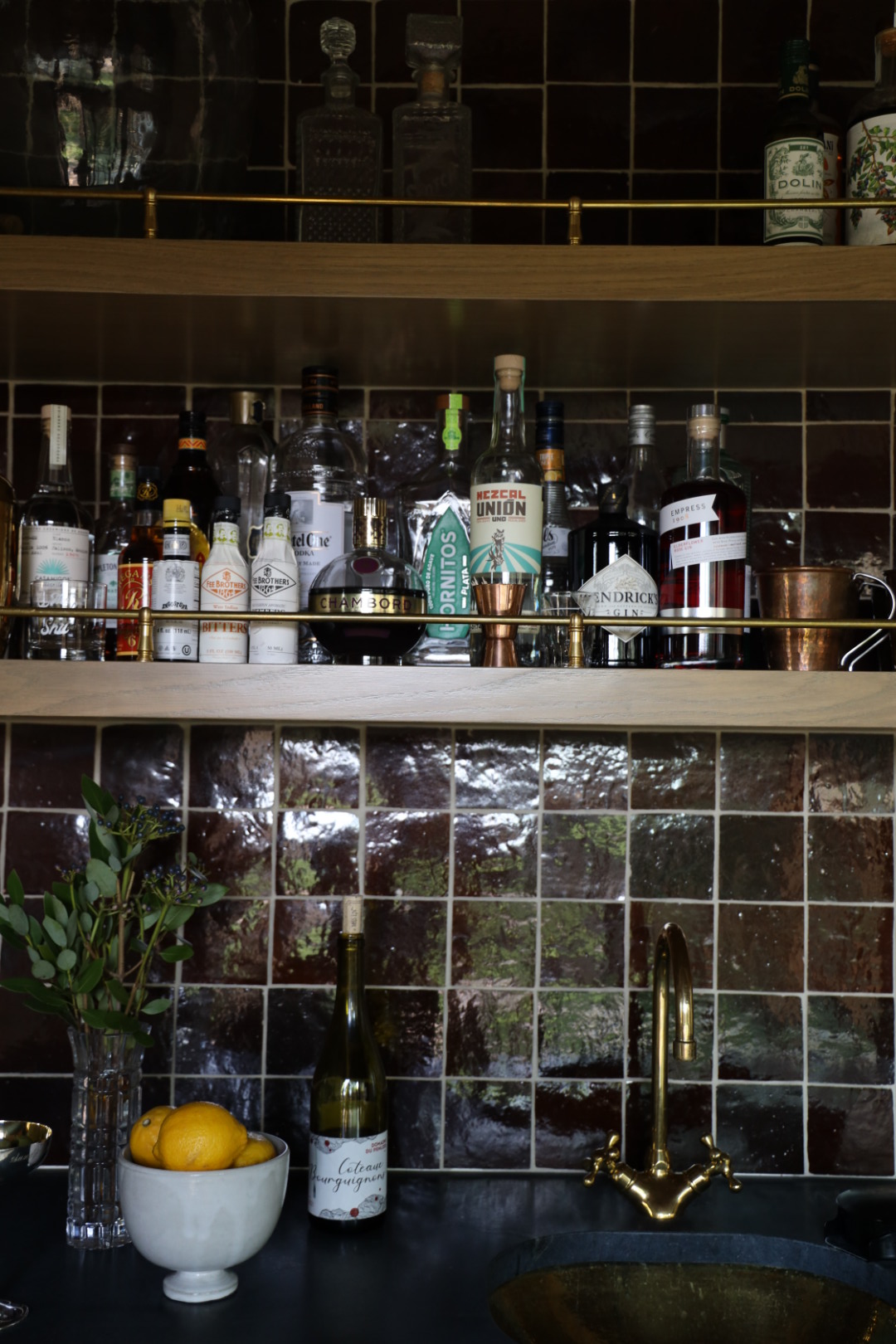
 

A stylish home wet bar featuring open wood shelves with brass gallery rails, a curated selection of liquor bottles, and vintage glass decanters. The backdrop is deep brown glossy zellige tile, adding depth and texture. Below, a dark stone countertop houses a hammered brass sink and an unlacquered brass bridge faucet. A ceramic bowl filled with fresh lemons and a glass vase with greenery add a natural touch, while a bottle of wine completes the effortlessly styled bar setup.
Photo: Bozeman Media Design

Where We Ordered Our Rails

We sourced our rails from ‘The Brass Addict’ on Etsy, and they’re completely customizable—which is key because every shelf setup is different. Unlike big-box store options that come in fixed sizes, these were made to fit exactly to our shelves.

Here’s what you need to know before ordering:

  • Measure, measure, measure. The vendor provides a sizing guide, which helps determine the exact length you need, how many center posts you’ll need for support, and whether you want end caps to “close off” the rail.
  • Decide on your finish. We went with unlacquered brass, which ages over time and gives that antique, lived-in feel. But, if you want something that stays bright and polished, you can choose lacquered brass or even a different metal.
  • Think about where you want them. Do you want a rail just along the front of the shelf? Or do you want one along the sides too, for a fully enclosed look?
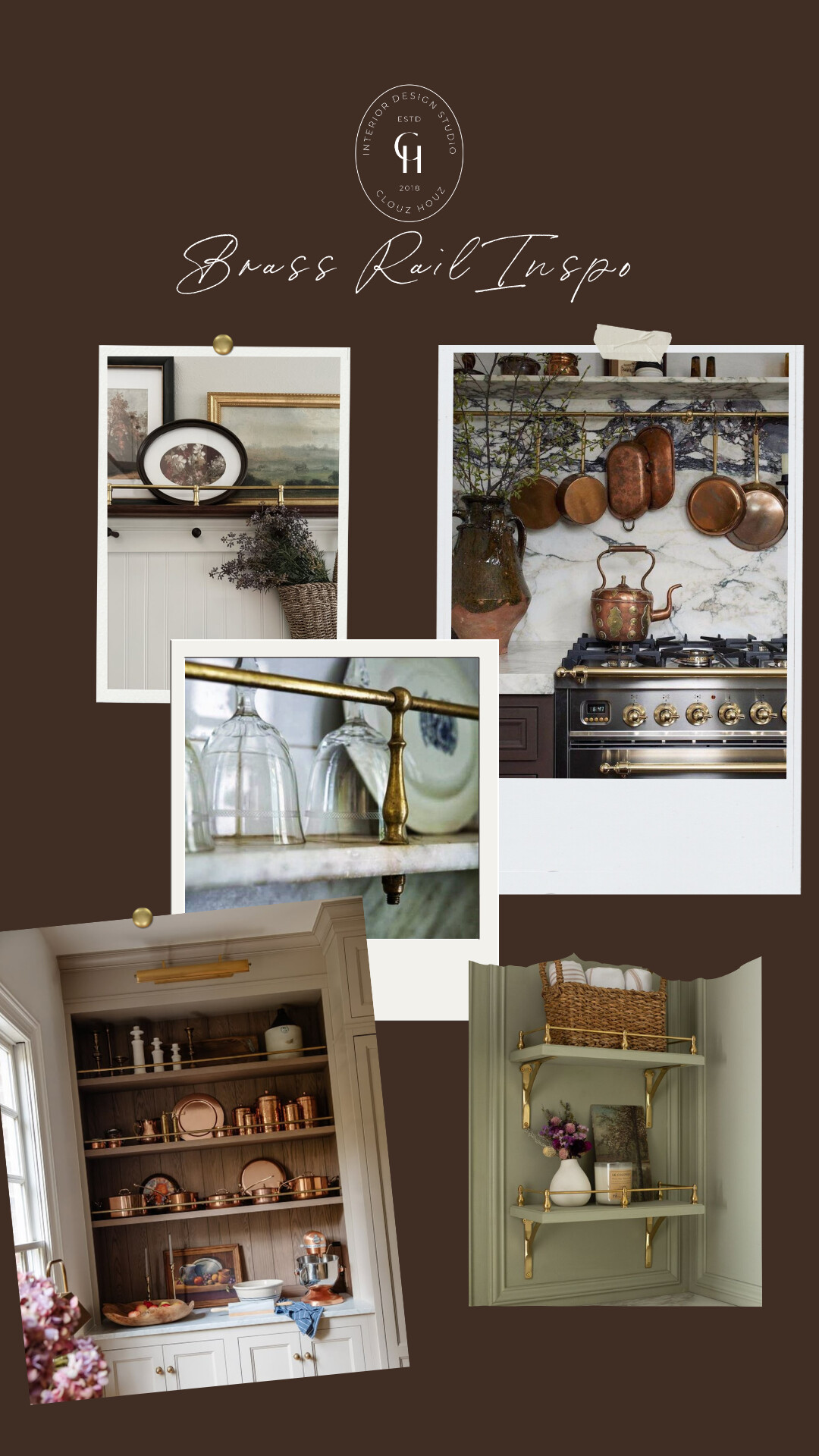
 

A curated mood board featuring brass rail inspiration in various home settings. The collage showcases elegant brass gallery rails used on open shelving, including a kitchen with a marble backsplash and hanging copper cookware, a butler's pantry with warm wood tones and neatly arranged copper accents, and a charming nook with sage green shelves and brass brackets. Close-up shots highlight the details of unlacquered brass rails, demonstrating how they add functionality and a refined, built-in look to shelving. A sophisticated blend of European-inspired design and timeless elegance.


Other Places You Can Use Brass Rails

I think many people assume these are just for bar shelves. But, they can work in many other places around the house!

Kitchen Open Shelving – If you have floating shelves in your kitchen, a brass rail can help keep dishes, glasses, and cookbooks in place while adding a polished look.

Built-In Hutch or China Cabinet – Do you have open shelving in a hutch? If so, a rail can add an extra layer of detail, making it feel more like a high-end furniture piece.

Bathroom Shelves – Keep bottles, candles, and small décor items contained on floating shelves.

Living Room or Office Shelves – Use rails on a bookshelf to section off styling areas, or to frame in decorative objects.

Media Console or Entryway Table – If you have an open console with a bottom shelf, adding a brass rail can help create a designated space for books, baskets, or decorative objects.


The Evolution of Our Bar Area

One thing I love about this space is how much it has evolved. At first, we designed it with entertaining in mind, imagining it as the go-to spot for mixing cocktails when friends and family came over. And yes, it absolutely serves that purpose—we’ve curated a collection of spirits and glassware that make every gathering feel a little more special. But, over time, we’ve found ourselves using it in many other ways.

It has become a natural snack station when hosting, a convenient spot to lay out a cheese board or small appetizers so guests can easily help themselves. Surprisingly, it’s also turned into a little morning coffee nook. I know—a bar for coffee? But when we have guests staying with us, it’s the perfect setup for a small coffee station, making it easy to grab a cup without crowding the kitchen.

And, even when it’s not in use, it still serves as a styling moment. The layered bottles, warm brass accents, and collected glassware give it a curated feel that makes the space feel lived-in and intentional. It’s a functional space, yes, but it’s also one of those corners of the home that just looks good, even when it’s just sitting there.

Shop Our Bar Setup

If you love the look and want to add something similar to your home, here’s where you can find the pieces we used:

Join the Conversation

get inspired
#clouzhouz
follow along
@clouz_houz
Ok here’s the truth- I have a lot of favorite whites- but this may be my new fave for cabinetry! 
Here’s the part no one tells you:
Most “bad” white cabinets aren’t bad colors… they’re bad context. White fails when it’s chosen in isolation. Paint chips are judged under fluorescent store lighting, held next to nothing, and decided before cabinets, counters, floors, or hardware are even finalized. Then that same white gets wrapped around an entire kitchen and suddenly feels gray at noon, yellow at night, or weirdly dull no matter how much light you have.
That’s why we chose Shoji White by Sherwin-Williams for our kitchen cabinets this time around.
Not because it’s trendy.
Not because it photographs well.
But because it behaves.
Shoji White has a soft warmth that doesn’t show up on a chip, but does show up when it’s next to real materials. It stays steady throughout the day, doesn’t compete with natural wood or stone, and doesn’t turn chalky once it’s covering full-height cabinetry. That consistency is what actually makes a white “safe” — not how popular it is.
Designer truth:
If a white only looks good at one time of day, it’s not a good cabinet white.
If it needs perfect lighting to work, it’s not a good cabinet white.
If paint decisions make you spiral, it’s not because you’re bad at this (it’s because white is reactive, and no one teaches you how to test it properly).
Our blog goes live today at 3:00pm PST, where I break down how to evaluate whites in your actual space and share a few other cabinet whites we consider truly “safe” — the ones we use repeatedly for clients because they hold up in real life, not just in photos.
Save this if you’re choosing cabinets soon.
When I turned 50, I thought my story was already written.
Turns out, I was just getting to the good part.
I’ve rebuilt homes—and rebuilt a life.
Left what was familiar. Started over more than once.
Turned a lifelong love for design into a business alongside my husband, creating intentional homes for people all over the country.
I believe spaces should hold real life… the messy, meaningful, beautiful moments.
And I’ve always looked at older homes and thought, look at the potential.  Maybe that’s why starting over has never scared me, because I see life the same way. Not as finished, but as full of possibility.
How about you? Are you in the middle part of life and just getting going??? I want to hear! And, please don’t hesitate to reach out if you want some advice on how to get started- I’m realizing we are all in this together. 🤍
Life is short. Make it beautiful.
January, already?!
This month’s edit ended up being a mix of things I naturally reached for: cozy knits, everyday staples that don’t try too hard, little home upgrades that make winter feel more intentional. A few things for staying in, a few things for stepping out, and a few things that just make the house feel good again after the holiday rush.
It’s that in-between season where comfort wins, neutrals feel right, and anything with warmth or texture just makes sense. Simple, useful, grounding.
Here’s what’s on my radar as we settle into the new year. Comment “edit” for all my monthly picks! (Live on the blog at 3:00pm PST).
Hi 🤍 if you’re new here—my husband and I are the founders of Clouz Houz.
Three months ago, we packed up our life and moved across the country to follow a dream: expanding our design business in new ways and planting roots in a place completely unfamiliar to us. 
We bought a house in Middle Tennessee to renovate and call home… in a community where we knew no one.
It’s been scary. And humbling.
But we’re doing it.
While we haven’t gotten as far as we hoped on this first project, we are making progress—little by little. New hardwood floors. New electrical. Kitchen and laundry demo complete. A bathroom fully replumbed and rebuilt. 
And still… so much more ahead.
Living in the middle of a renovation while starting over at the same time has been overwhelming in ways we didn’t anticipate. This isn’t our first remodel, but this season feels different. It’s stretching us. Asking for patience. For trust. For presence.
And maybe that’s the point.
Progress doesn’t equal perfection. Sometimes it just looks like staying in it, even when the path feels uncertain. Learning a new place. Meeting new people. Believing that what you’re building—slowly—will be worth it.
This house is testing us, yes. 
Follow along as we restore this 1930s bungalow and build a new chapter, one step at a time.
2026, we can’t wait to see all that you have in store for us. 🤍